第28章:境界で守る③:外部API/DBの“汚れ”を中に入れない🧼🧱
この章のゴール🏁✨
- 外部APIやDBの“クセ”を ドメイン(内部モデル)に持ち込まない 仕組みが作れるようになる😊
- 「翻訳(変換)専用レイヤー=Adapter / Anti-Corruption Layer」を、迷わず置ける ようになる🛡️
- 外部が変わっても、内部は壊れにくい(修正が局所で済む)状態にできる🔧✨
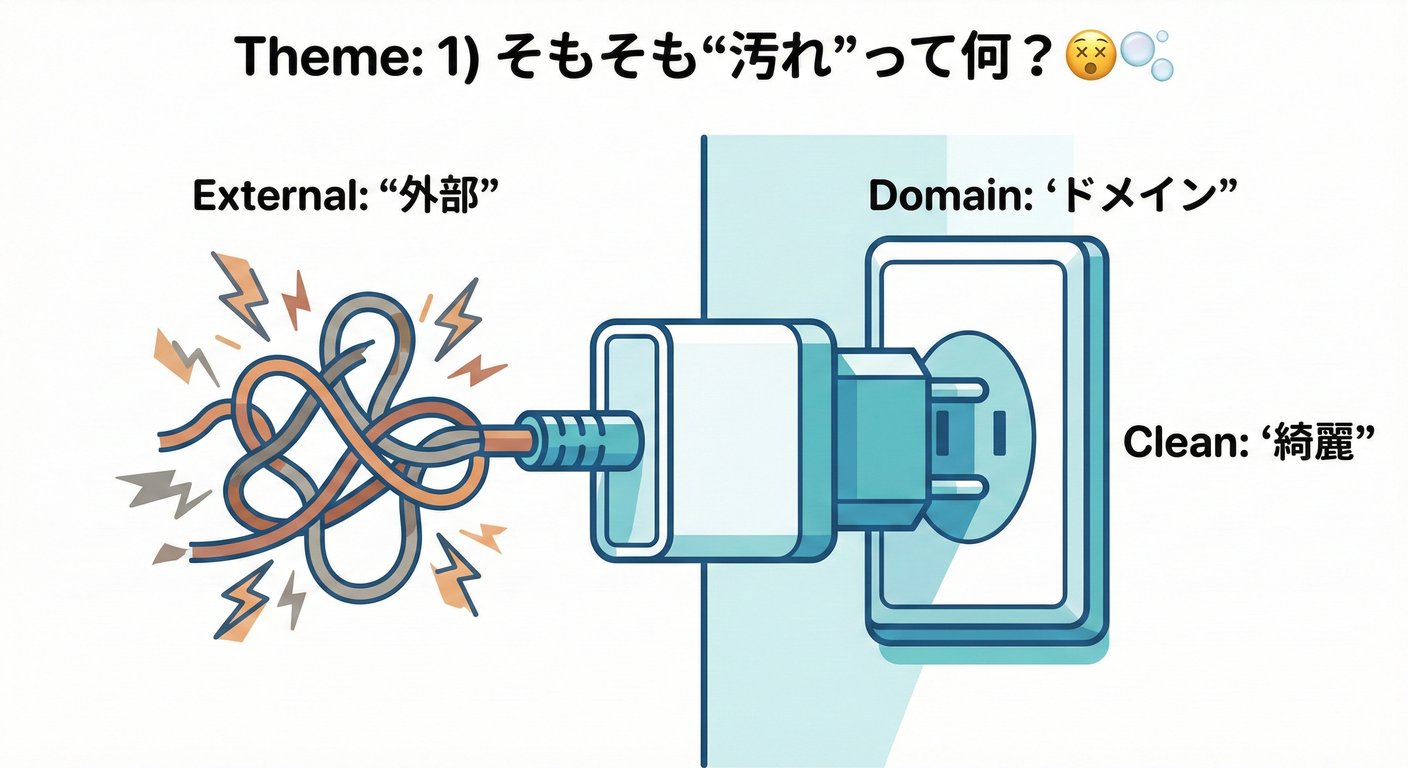
1) そもそも“汚れ”って何?😵💫🫧
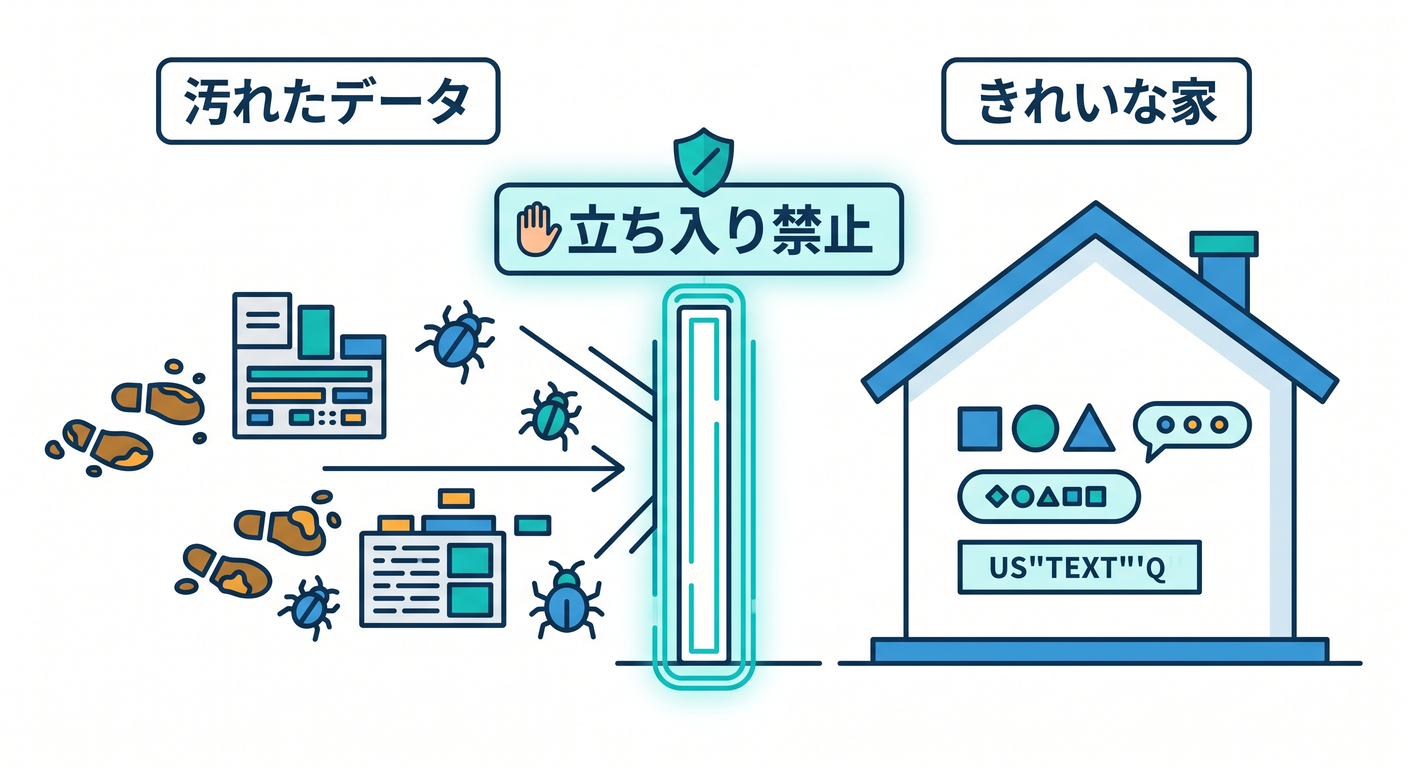
外部API/DBって、だいたいこういう“汚れ”を持ってきます👇
- 型が弱い:数値が
"1000"(文字列)で来る、true/false が"0"/"1"で来る😇 - null・欠損が普通にある:必須っぽいのに無い、空文字の意味が不明🤷♀️
- 日付が地獄:UTCなの?ローカルなの?フォーマット複数あるの?⏰🌀
- Enumが増える/変わる:知らないステータスが突然来る(追加は絶対ある)📦💥
- 丸め/通貨/単位が曖昧:税・小数・単位の混在💸
- 仕様が“静かに変わる”:プロパティ追加・削除・意味変更(バージョン差)🫠
- エラー表現が雑:200でエラー返す、codeだけで意味不明、メッセージ揺れる😵💫
👉 だから結論:外部の形のまま内部に入れたら負けです🧱🧼
2) 今日の最重要ルール(覚えたら勝ち)🛡️💖
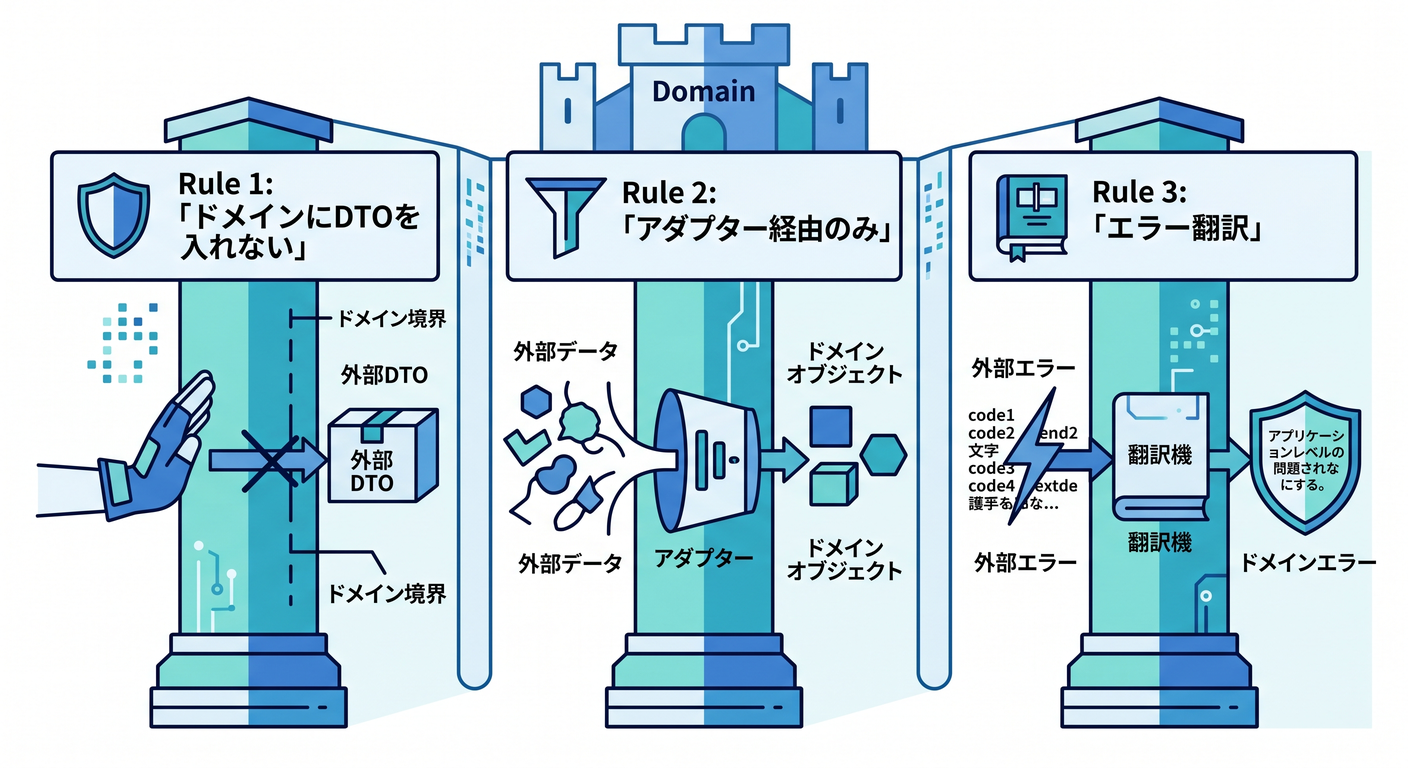
ルールA:ドメインに “外部DTO” を入れない🚫📦
- 外部APIのレスポンスDTO、DBのEntityを、ドメインの中で使い回さない🙅♀️
- ドメインは自分たちの言葉(VO/Entity)だけで喋る🏛️✨
ルールB:“翻訳(変換)” は1か所に集める🧱➡️🏛️
- 「どこでも変換」すると、修正が地獄に散らばる😇
- 変換担当を Adapter(翻訳係) に固定する📌
ルールC:外部の失敗は “外部エラー” として持ち帰る⚠️
- 外部障害・仕様違い・タイムアウトを、内部の意味に 勝手に混ぜない
- 境界で「外向けの失敗」→「内部で扱える失敗」に整理する🧾✨
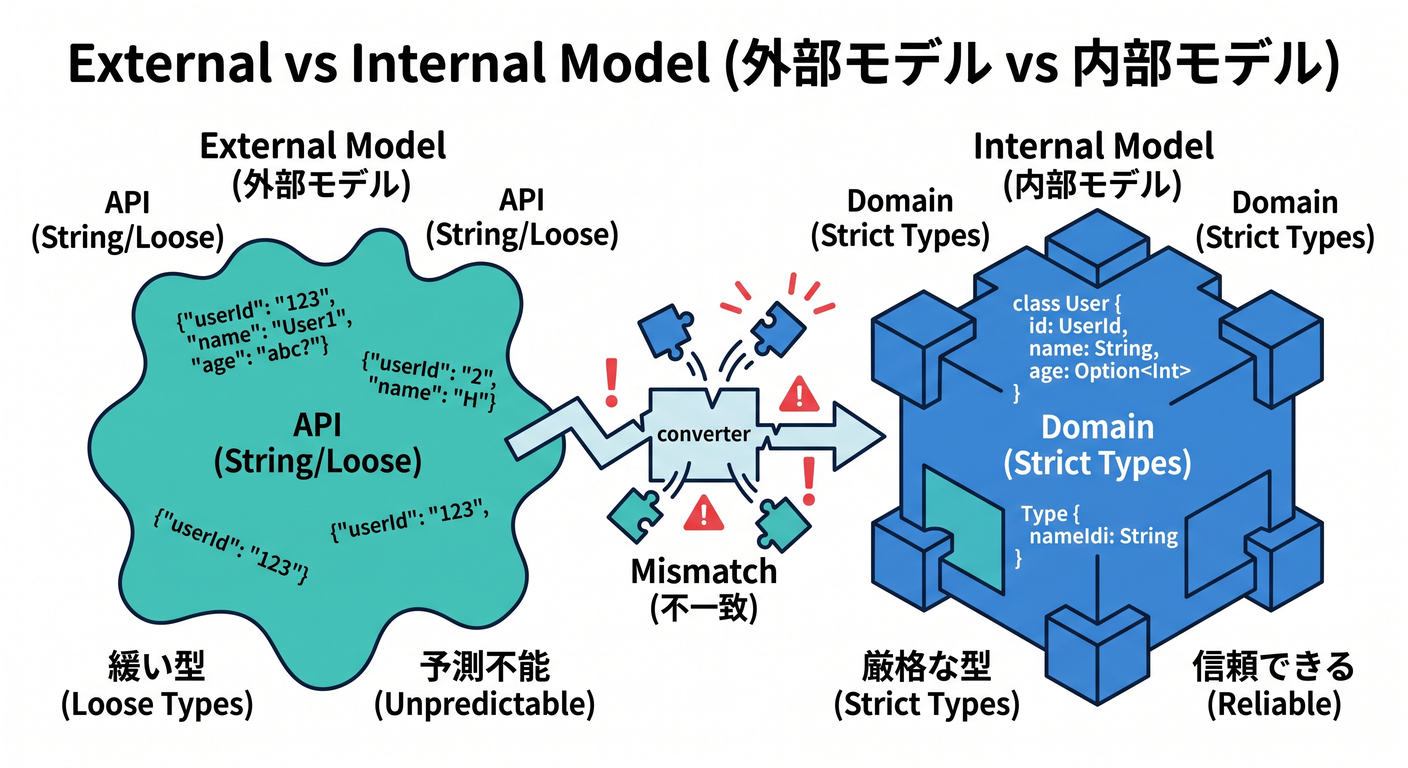
3) ミニ題材:サブスク課金の外部決済API💳✨
-
外部:Payment Provider API
amountが 文字列"1200"で返るcurrencyが"JPY"だけど、たまに小文字"jpy"が混ざるstatusに知らない値が増える
-
内部:ドメインは Money / PaymentStatus / SubscriptionId みたいに型で守る💎
4) こう分けると強い💪✨(おすすめ構成)
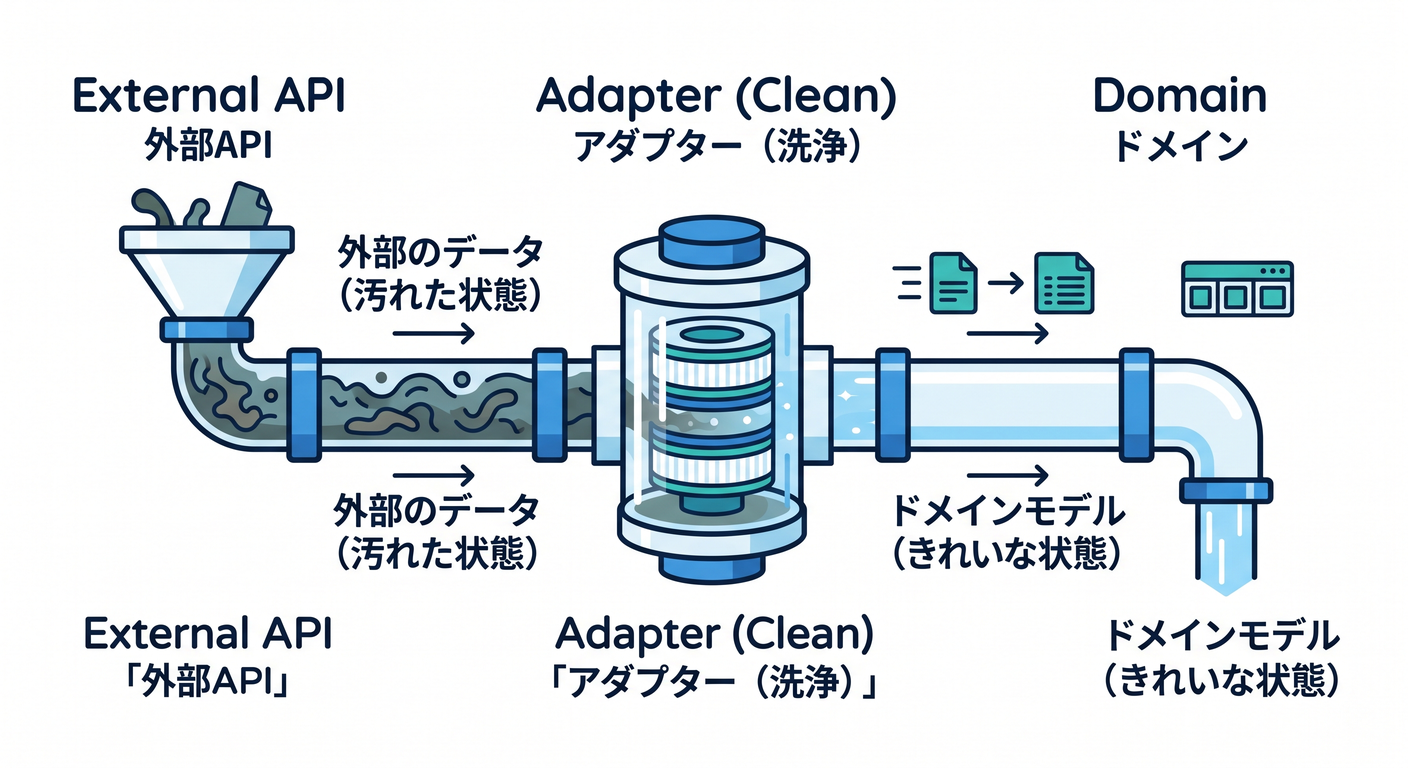
- External(外部):HTTPクライアント + 外部DTO
- Adapter(翻訳層):外部DTO → ドメイン型(VO/Entity)へ変換
- Domain(中):不変条件つきの型だけ(外部都合ゼロ)
イメージ: 外部JSON 📦 → 外部DTO 📦 → Adapter🧼 → ドメイン🏛️
5) 実装してみよう(外部APIの汚れを隔離)🧼🌐
5-1. 外部DTO(これは汚れてOK😌)
外部の形をそのまま受け止める箱です📦 (ここで頑張って“綺麗にしない”のがコツ!変換はAdapterで✨)
using System.Text.Json.Serialization;

public sealed record PaymentApiResponseDto(
    [property: JsonPropertyName("id")] string? Id,
    [property: JsonPropertyName("amount")] string? Amount,
    [property: JsonPropertyName("currency")] string? Currency,
    [property: JsonPropertyName("status")] string? Status,
    [property: JsonPropertyName("customer_email")] string? CustomerEmail
);
5-2. ドメイン側(ここは絶対に綺麗✨🏛️)
※第11〜13章で作ったVOがある前提で、雰囲気だけ載せるね💎
public sealed record Money(decimal Amount, string Currency)
{
    public static Result<Money> Create(decimal amount, string currency)
    {
        if (amount < 0) return Result.Fail("Amount must be >= 0");
        if (string.IsNullOrWhiteSpace(currency)) return Result.Fail("Currency required");
        var c = currency.Trim().ToUpperInvariant();
        return Result.Ok(new Money(amount, c));
    }
}

public enum PaymentStatus
{
    Succeeded,
    Failed,
    Pending,
    Unknown // ←外部は増えるので“逃げ道”を用意🛟
}

public sealed record PaymentReceipt(string PaymentId, Money Money, PaymentStatus Status, Email? CustomerEmail);
5-3. Adapter(ここが主役🧼🧱)
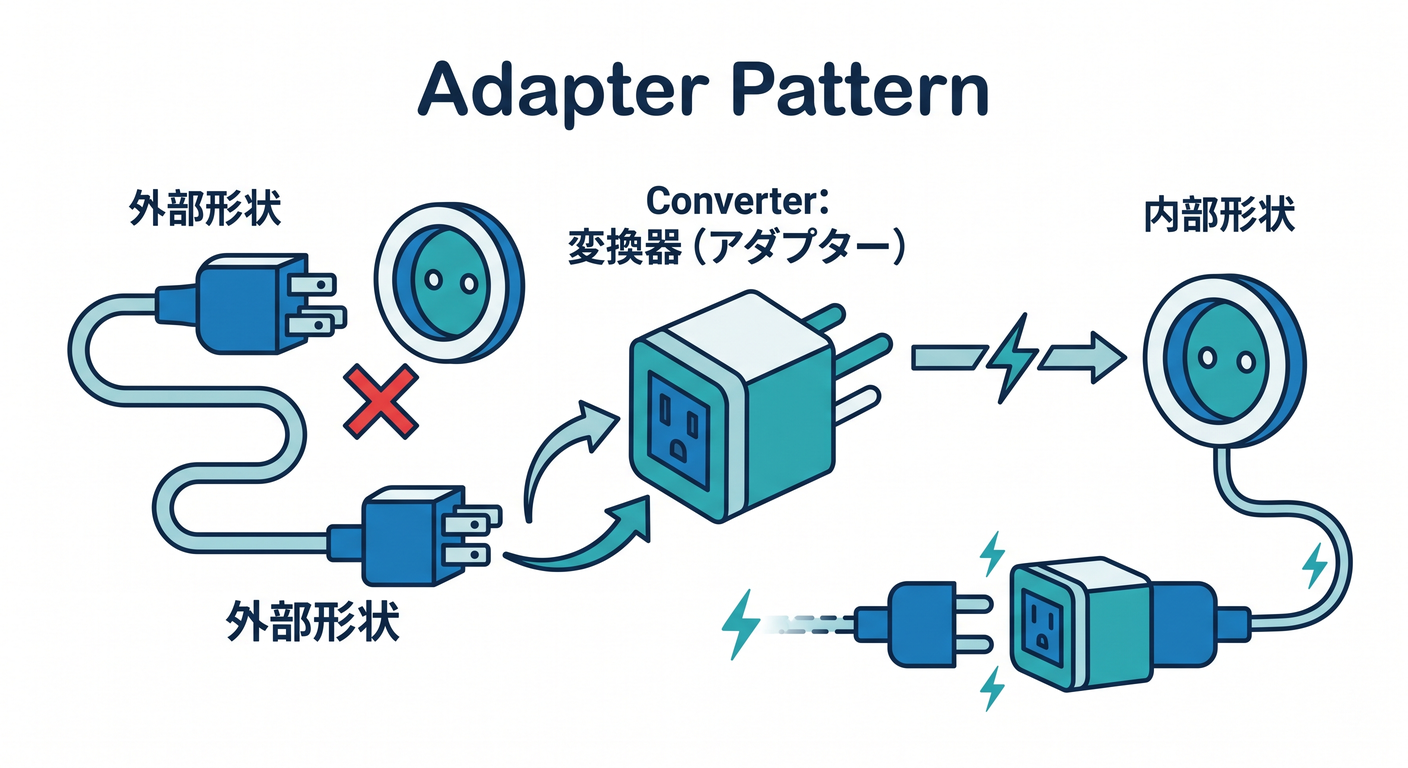
外部DTOの“汚れ”を吸収して、ドメインに渡します✨
ポイントは👇
- null/空文字を吸収
- 文字列数値を安全にParse
- statusの未知値は Unknownへ
- エラーは「外部由来」と分かる形で返す
public sealed class PaymentApiAdapter
{
    public Result<PaymentReceipt> ToDomain(PaymentApiResponseDto dto)
    {
        // 1) 必須項目の欠損を吸収(外部由来エラーとして)
        if (string.IsNullOrWhiteSpace(dto.Id))
            return Result.Fail("External API: id is missing");

        if (string.IsNullOrWhiteSpace(dto.Amount))
            return Result.Fail("External API: amount is missing");

        if (!decimal.TryParse(dto.Amount, out var amount))
            return Result.Fail("External API: amount is invalid");

        var currency = (dto.Currency ?? "").Trim();
        var moneyResult = Money.Create(amount, currency);
        if (!moneyResult.IsSuccess)
            return Result.Fail("External API: money is invalid");

        // 2) status翻訳(知らない値が来る前提!)
        var status = ParseStatus(dto.Status);

        // 3) Emailは“任意”にして吸収(無ければnullでOK)
        Email? email = null;
        if (!string.IsNullOrWhiteSpace(dto.CustomerEmail))
        {
            var emailResult = Email.Create(dto.CustomerEmail);
            if (emailResult.IsSuccess) email = emailResult.Value;
        }

        return Result.Ok(new PaymentReceipt(
            PaymentId: dto.Id.Trim(),
            Money: moneyResult.Value,
            Status: status,
            CustomerEmail: email
        ));
    }

    private static PaymentStatus ParseStatus(string? raw)
        => (raw ?? "").Trim().ToLowerInvariant() switch
        {
            "succeeded" => PaymentStatus.Succeeded,
            "failed"    => PaymentStatus.Failed,
            "pending"   => PaymentStatus.Pending,
            _           => PaymentStatus.Unknown
        };
}
6) 外部APIは落ちる前提:HTTPの回復性(Resilience)も境界で🛟🌩️
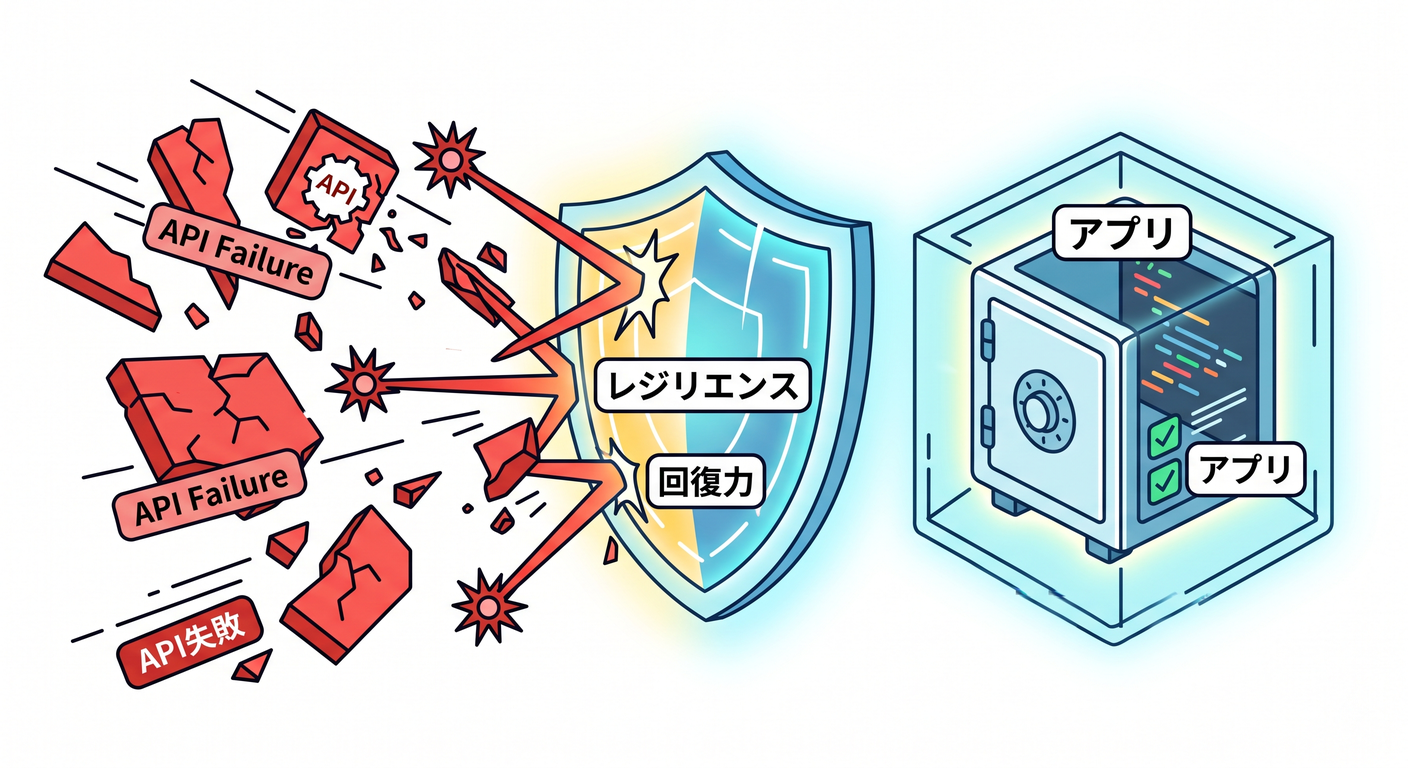
外部APIは「一時的に落ちる」「遅い」「たまに失敗」が普通です😇 .NET では Microsoft.Extensions.Http.Resilience を使った “標準レジリエンス” の組み込みが案内されています。(Microsoft Learn)
例:HttpClientに標準レジリエンスを追加(リトライ等の戦略が束ねて入るイメージ)🛡️
using Microsoft.Extensions.DependencyInjection;

var services = new ServiceCollection();

services.AddHttpClient<PaymentApiClient>()
        .AddStandardResilienceHandler(); // 標準の回復性ハンドラー
AddStandardResilienceHandler は .NET のドキュメント上でも “標準の回復性戦略” として説明されています。(Microsoft Learn)
7) DBの“汚れ”も同じ:Entityをドメインに直で入れない🗄️🧼
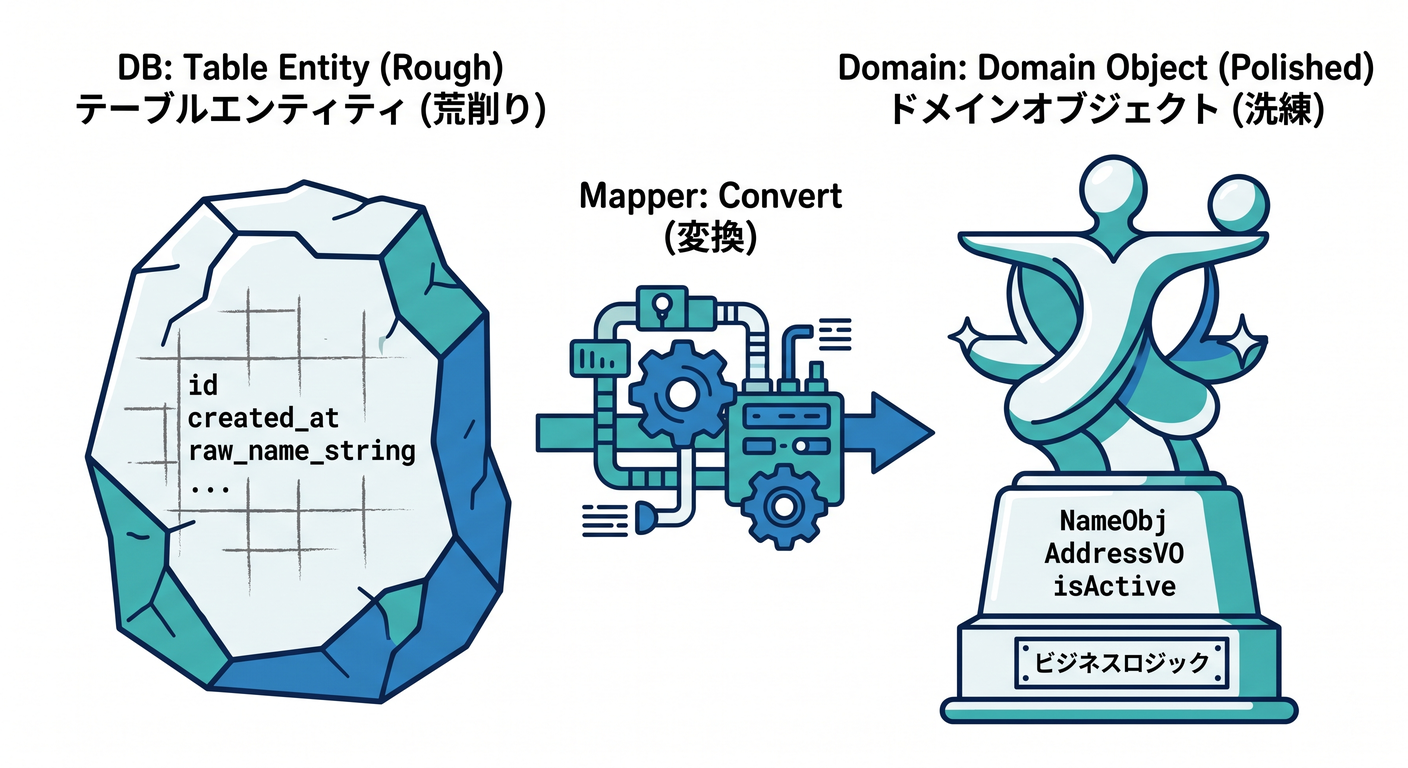
DB側も、実は同じ問題が出ます💥
- 旧仕様の列が残ってる
- null許容が広い
- statusが数値で意味不明
- 文字列の正規化がされてない
だからおすすめは👇
- DB Entity(永続化モデル) と Domain を分ける
- Repository/Adapter で相互変換する
// DB Entity(汚れてOK)
public sealed class SubscriptionEntity
{
    public string Id { get; set; } = "";
    public int Status { get; set; }          // 0/1/2...
    public string? CustomerEmail { get; set; } // nullあり得る
}

// Domain(綺麗)
public enum SubscriptionStatus { Active, Canceled, Unknown }

public sealed record Subscription(SubscriptionId Id, SubscriptionStatus Status, Email? Email);
変換はここ👇(Repository内でも、専用MapperでもOK)
public static class SubscriptionMapper
{
    public static Result<Subscription> ToDomain(SubscriptionEntity e)
    {
        if (string.IsNullOrWhiteSpace(e.Id))
            return Result.Fail("DB: id is missing");

        var id = SubscriptionId.From(e.Id);

        var status = e.Status switch
        {
            1 => SubscriptionStatus.Active,
            2 => SubscriptionStatus.Canceled,
            _ => SubscriptionStatus.Unknown
        };

        Email? email = null;
        if (!string.IsNullOrWhiteSpace(e.CustomerEmail))
        {
            var r = Email.Create(e.CustomerEmail);
            if (r.IsSuccess) email = r.Value;
        }

        return Result.Ok(new Subscription(id, status, email));
    }
}
8) テストがめちゃ効く!Adapterは“仕様の盾”🛡️🧪
Adapterは 壊れやすい境界 なので、テストがコスパ最強です💖
- ✅ 外部DTOのサンプルJSON(成功/失敗/欠損/未知status)を用意
- ✅ Adapterが「期待通りのドメイン」or「期待通りの外部エラー」を返すか確認
- ✅ 外部が変わったら、ここだけ落ちて気づける👀✨
超ミニ例:
[TestMethod]
public void UnknownStatus_Becomes_Unknown()
{
    var dto = new PaymentApiResponseDto("p_1", "1200", "jpy", "new_status", null);
    var adapter = new PaymentApiAdapter();

    var result = adapter.ToDomain(dto);

    Assert.IsTrue(result.IsSuccess);
    Assert.AreEqual(PaymentStatus.Unknown, result.Value.Status);
    Assert.AreEqual("JPY", result.Value.Money.Currency);
}
9) AIの使いどころ(超実用)🤖✨
AI導入済み前提なら、ここはめっちゃ相性いいです💕
- 外部DTOを貼って「汚れパターンを列挙して」🧼
- サンプルJSONを貼って「変換テストケースを20個出して」🧪
- Adapterのコードを貼って「境界値や欠損に弱い所をレビューして」👀
- status一覧を貼って「Unknownに落とすべき値はどれ?」って相談🛟
おすすめプロンプト例👇
- 「この外部レスポンスDTOをドメインに入れない設計にしたい。Adapterの責務と分割案を3つ出して」
- 「このAdapterに必要なテストケースを、欠損/型不正/未知Enum/空白揺れの観点で列挙して」
10) まとめ🎀✨(この章の勝ち筋)
- 外部API/DBの“汚れ”は Adapterで吸収🧼🧱
- ドメインは 自分たちの型(VO/Entity)だけで守る🏛️💎
- レジリエンス(リトライ等)も 境界に置く🛟(Microsoft Learn)
- Adapterはテストが刺さる🧪💖
次の第29章は「DB制約は最後の砦🏰🗄️」で、アプリ + DB の二重防御に進むよ〜!😊✨
(おまけ:2026の言語/ランタイムの前提メモ📌)
- C# 14 は 2025年11月リリースとして整理されています。(Microsoft Learn)
- .NET 10 は 2025年11月リリースとして案内されています。(Microsoft Learn)
- Visual Studio 2026 のリリースノートも公開されています。(Microsoft Learn)